
Most first trips to Israel are built around two cities. Jerusalem holds the holy sites and the deep layers of history, while Tel Aviv brings the beaches, the Bauhaus streets and the restaurants. Both deserve the time they get, but Israel is a small country, and a few extra days open up places with a very different character.
The seven cities below are the ones we suggest most often when travelers ask what else there is. Some fit into a driving day, others make a good base for a night or two. Pick the ones that match your interests and let the route follow.
1. Acre (Akko)
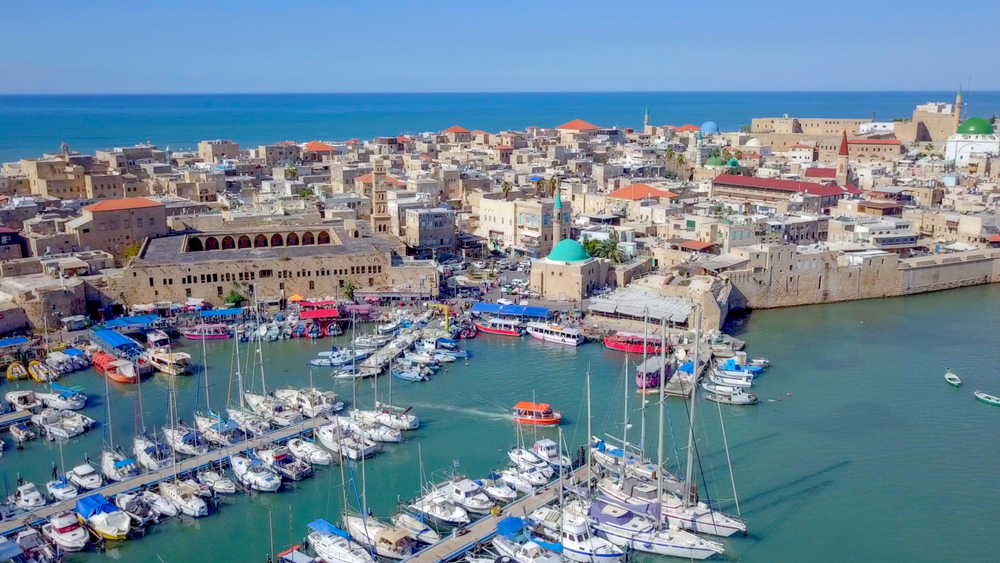
Acre sits on a small peninsula on the northern coast, across the bay from Haifa. Its walled old city is a UNESCO World Heritage Site, and much of it stands on top of the Crusader town. You can walk through the vaulted halls of the Hospitaller fortress, known today as the Knights’ Halls, and follow the Templars’ Tunnel, which once linked their fortress to the port.
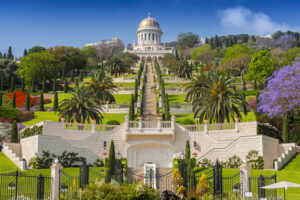
Above ground the old city is Ottoman, with the green-domed al-Jazzar Mosque, old caravan inns and a busy market. Jews, Muslims and Christians live side by side here, and the holiest Baha’i site, the Shrine of Baha’u’llah, stands in formal gardens just outside town. Acre is also known for its hummus and its fish restaurants by the harbor.
A day covers the highlights. Stay the night and you can walk the sea walls at sunset after the day visitors have gone.
2. Safed (Tzfat)
Safed sits high in the hills of the Upper Galilee and is one of the four holy cities of Judaism. In the 16th century it became the center of Kabbalah, the Jewish mystical tradition, and historic synagogues such as the Ari and the Abuhav still hold services along its narrow stone lanes.
Below them, the artists’ quarter is full of galleries selling Judaica, ceramics and paintings. Safed is cooler than the coast in summer and can be cold in winter, so pack a layer. It also works as a base: the Sea of Galilee, the Golan Heights and the trails of the Upper Galilee are all within easy driving distance, which makes it a natural stop on Jewish heritage tours.
Plan around Shabbat. From Friday afternoon to Saturday evening most shops and galleries close, while the synagogues fill with worshippers.
3. Beersheba (Be’er Sheva)
Beersheba is the main city of the Negev and home to Ben-Gurion University, which gives it a young, student feel. Its story reaches back to Abraham, and Tel Be’er Sheva, the excavated biblical town just outside the city, is part of a UNESCO listing of biblical tels.
The modern city was laid out by the Ottomans around 1900. Their street grid, the restored railway station and the former governor’s house, now the Negev Museum of Art, still anchor the old town. Beersheba has long been known for its Bedouin market, and Bedouin food and crafts are worth looking for while you are in the region. West of the city, the Israeli Air Force Museum at Hatzerim displays dozens of aircraft in the open air, a favorite with families.
4. Ashkelon
Ashkelon is a beach city on the southern coast and one of the oldest settlements in the country. Ashkelon National Park, right by the sea, holds a Canaanite gate built of mud brick, considered one of the oldest arched gateways in the world, along with Roman columns and the remains of medieval walls. You can walk among the ruins in the morning and swim off the beach beside them in the afternoon.
The marina is a pleasant spot for an evening walk or a few hours under sail. Ashkelon lies close to the Gaza Strip, so whether it fits your trip depends on conditions at the time you travel. This is a question to settle with your planner closer to the date.
5. Mitzpe Ramon
Mitzpe Ramon sits on the rim of Makhtesh Ramon, a vast erosion landform about 40 kilometers long that is usually called the Ramon Crater. It was carved by water and time rather than by a meteor or a volcano, and its walls expose rock layers from very different geological eras. Many travelers stop at the lookout and drive on, but the town is worth a night.
From here you can hike into the makhtesh, cross its floor by jeep, or rappel down the cliffs with a licensed operator. The desert sky is dark enough for some of the best stargazing in Israel, and local guides run night tours with telescopes. The old industrial zone, known as the Spice Route Quarter, now holds galleries, workshops and restaurants, and families enjoy the alpaca farm just outside town.
6. Netanya
Netanya is a seaside city north of Tel Aviv, home to many immigrants from France and English-speaking countries, with a relaxed, residential feel. Its long beaches lie below sandstone cliffs, with a promenade along the top and several ways down to the sand near the city center. Calm stretches of water make it a good place for children to swim or take a first surfing lesson.
North of the city, the Beit Yanai beach and the Alexander Stream are good for a picnic and a short walk. Soft-shell turtles live in the stream and can often be seen from the Turtle Bridge, a short drive inland. Netanya is also a convenient base for Caesarea, a short drive north.
7. Nahariya
Nahariya is the northernmost city on Israel’s coast, a short drive from the Lebanese border. It was founded in the 1930s by Jewish immigrants from Germany, and a small stream runs down the middle of its main street to the sea.
The city is a base for the western Galilee. Achziv National Park, just to the north, pairs beaches and tidal pools with ancient ruins. Farther north, the white chalk cliffs of Rosh Hanikra hide sea grottoes reached by cable car, and inland trails lead to the natural arch of the Keshet Cave and along the Nahal Kziv stream below the Crusader castle of Montfort. Because these sites are close to the border, access has been limited at times, so check what is open before you build them into your days.
Planning Your Route
- Pair cities by region. Acre and Nahariya fit together on a northern coast day, Safed goes well with the Sea of Galilee, and Beersheba and Mitzpe Ramon sit on the road south to Eilat.
- Count Shabbat. Safed and much of Beersheba and Netanya slow down from Friday afternoon to Saturday evening, while Acre’s old city stays largely open.
- Watch the season. The Negev is hot from late spring to early fall, so hikes start early. Safed can be chilly in winter.
- Check conditions near the borders. Plans for Ashkelon and the far north depend on the situation at the time of travel. Read our safety and flexibility page before you book.
Add These Cities to a Private Tour
Any of these cities can be added to an itinerary alongside Jerusalem and Tel Aviv, as a single stop or as a base for a few nights. Our private tours are built around your dates, interests and pace, with guides licensed by Israel’s Ministry of Tourism. For the two big cities, see our guides to Jerusalem and Tel Aviv.
Tell us which of these places caught your eye, and we will show you how they fit your route. Get a free quote.
Frequently Asked Questions
Which city should I add first to a trip beyond Jerusalem and Tel Aviv?
For most travelers it is Acre or Safed. Acre suits those who love Crusader history and food, while Safed suits those interested in Jewish mysticism and art, and both pair well with the Sea of Galilee.
How many extra days do I need for these cities?
Two to three extra days cover the north, with Acre, Safed and Nahariya, or the south, with Beersheba and Mitzpe Ramon. Netanya and Ashkelon fit into a single day on the coast.
Can I reach these cities without a car?
Trains serve Acre, Nahariya, Netanya, Beersheba and Ashkelon, and buses reach Safed and Mitzpe Ramon. Public transport stops on Shabbat, and the sites around the cities, such as Rosh Hanikra or the floor of Makhtesh Ramon, are far easier with a private driver.
Related reading: The Best Things to Do in Nazareth and 15 Off-the-Beaten-Path Things to Do in Israel.