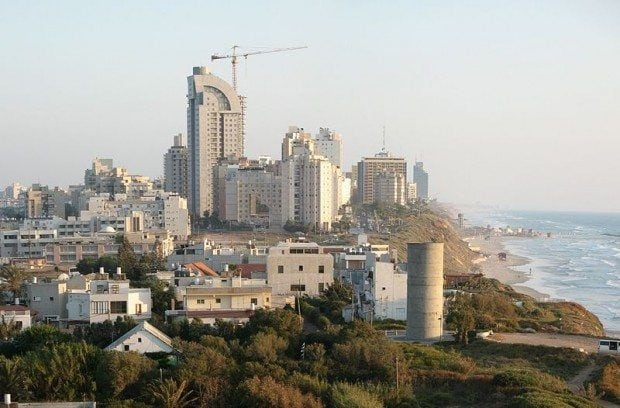
Netanya is where many Israelis go when they want the Mediterranean without the pace of Tel Aviv. The city sits on the coast about 30 kilometers north of Tel Aviv, and almost its whole western edge is beach, with a line of sandstone cliffs between the sand and the town. Hotels and apartments look straight out to sea, and a promenade runs along the top of the cliffs for much of the way.
For travelers, Netanya works in two ways. It is an easy place for a few slow beach days at the start or end of a trip, and it is a practical base for the coast between Tel Aviv and Haifa, with Caesarea, the wineries of Zichron Ya’akov and Haifa all within a short drive. This guide covers both.
The Beaches Below the Cliffs
Netanya’s shoreline runs for roughly 14 kilometers, and the city divides it into a string of named beaches, each with its own way down from the clifftop. Stairways and ramps lead to the sand, and near the center a public elevator saves the climb back up after a long afternoon.
The central beaches
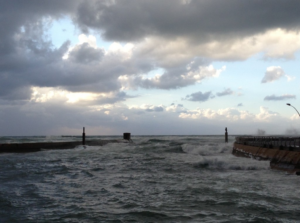
The beaches closest to the city center have the full set of services: lifeguards in season, showers, chairs and umbrellas to rent, beach volleyball and cafes on the sand. Breakwaters off parts of the shore keep the water calmer than on an open beach, which suits children and anyone who wants an easy swim rather than surf.
The quieter stretches
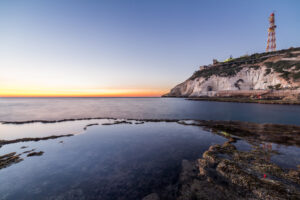
North and south of the center, the beaches grow quieter, with fewer buildings above them. Early in the morning you share them with walkers, fishermen and, when the wind is right, paragliders floating along the cliffs.
A separate beach
Netanya also has a separate beach for religious bathers, at Kiryat Sanz, with set days for men and for women, and modest swimwear is expected there. It was closed for repairs after a collapse damaged the cliff and its access stairs, so check whether it has reopened before you plan on it.
Swim only where a lifeguard is on duty. The Mediterranean has strong currents, and the lifeguard season usually runs from spring to October. Our guide to the best beaches in Israel explains the beach flags, the jellyfish season and the other practical points.
The Clifftop Promenade
The promenade is the city’s living room. It runs along the top of the cliffs with benches, lawns, playgrounds and lookouts, and in the evening it fills with families, couples and retirees who come out to watch the sun go down over the sea. It is flat and paved, so it suits strollers and anyone who prefers a gentle walk to a hike.
Its center is Ha’atzmaut Square, Independence Square, a few steps from the cliff edge. Cafes and restaurants spread out around it, and on summer evenings there is often music or a street performer. From the square you can walk to the railing, look along the coast in both directions, and take the stairs or the elevator down to the beach.
A Taste of France by the Sea
Netanya began in 1929 as a small farming settlement on the dunes. It was named after Nathan Straus, the American businessman and philanthropist who co-owned Macy’s, and it has grown into a city of more than 200,000 people.
Since the early 2000s, thousands of French Jews have settled here, and Netanya now has one of the largest French-speaking communities in Israel. You hear French on the promenade and in the shops, see menus in French around Ha’atzmaut Square, and find bakeries selling baguettes, croissants and pastries that would not look out of place in Paris.
For visitors, this mostly means good food. The cafes near the sea mix French bistro cooking with Israeli and North African dishes, and many are kosher, which makes Netanya a comfortable stop for travelers who keep kosher. Many of them close for Shabbat, from Friday afternoon to Saturday evening, so check before you plan a Friday night dinner.
The Iris Reserve
In the southern part of the city, a protected patch of sandy hills holds one of the largest remaining stands of the coastal iris, a dark purple, almost black flower that grows almost only on Israel’s coastal plain. For most of the year the reserve looks like ordinary scrub. In late winter, usually from February into March, thousands of irises bloom at once, and people come from all over the country to see them.
A short path loops through the reserve, and an hour is plenty. The flowers are protected, so stay on the path and leave them where they grow.
Poleg and the Beaches Nearby
Poleg beach
At the southern edge of the city, Poleg beach is wide and sandy and popular with surfers and windsurfers. Just inland, the Poleg Stream nature reserve has short trails among dunes and low sandstone ridges, at their best in spring, when the wildflowers are out.
Beit Yanai and the Alexander Stream
About 15 minutes’ drive north of Netanya, the Alexander Stream reaches the sea at Beit Yanai, part of a national park with a long beach and a shaded picnic area. A few kilometers upstream, near Kfar Vitkin, large soft-shell turtles often gather in the water below the Turtle Bridge, a favorite stop for children. You can drive there or follow a marked trail of about 4 kilometers along the stream.
A Base Between Tel Aviv and Haifa
Netanya sits on the coastal highway and the main railway line, which makes it a convenient base for the central coast. These are the day trips we plan most often from here:
- Caesarea, about half an hour north, with the Roman theater, Herod’s harbor and the beach beside the old aqueduct.
- Zichron Ya’akov, a little further north on the slopes of the Carmel, for a stroll along the old main street and a tasting at one of the wineries.
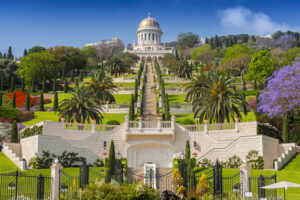
- Haifa, about an hour north, for the Bahá’í Gardens and the German Colony. Our guide to things to do in Haifa covers the city.
- Tel Aviv and Jaffa, 30 to 45 minutes south depending on traffic. See our guide to Tel Aviv for how we plan a day there.
Ben Gurion Airport is usually around 40 minutes away by car outside rush hour, so Netanya also works well for the first or the last night of a trip.
Practical Tips for Netanya
- Choose your season. The sea is warmest from June to October. Late winter brings the irises, and spring and autumn are the most pleasant times for walking the promenade and the nature reserves.
- Plan around Shabbat. Many restaurants and shops close from Friday afternoon to Saturday evening, and trains do not run. The beaches and the promenade stay open and are busiest on Saturday.
- Book ahead in summer. July and August and the Jewish holidays are the busiest times, when French and Israeli families come for the beach.
- Mind the sun and the wind. The promenade has little shade at midday, and the clifftop can be windy in winter, so bring a hat in summer and a layer in the cooler months.
Plan Your Netanya Stay with Us
Netanya fits easily into a trip along the coast, as a beach break or a base for Caesarea and the north. It works especially well on our family tours, where a quiet beach afternoon balances a busy morning of sightseeing. For more places to add to your route, see our guide to the cities to visit in Israel.
We plan every trip around your dates, interests and pace, and one team can arrange the hotels, private transportation, guiding and activities. Tell us when you are traveling and what you would like to see. Get a free quote.
Frequently Asked Questions
Is Netanya worth visiting?
Yes, if you want calm beaches and a slower pace than Tel Aviv. It is also a practical base for Caesarea, Zichron Ya’akov and Haifa, and it is close enough to Ben Gurion Airport for a first or last night.
How far is Netanya from Tel Aviv?
About 30 kilometers. The drive takes 30 to 45 minutes depending on traffic, and trains connect the two cities on weekdays.
When do the irises bloom in Netanya?
Usually from February into March, depending on the winter rains. The bloom changes from year to year, so check how it looks shortly before your visit.