
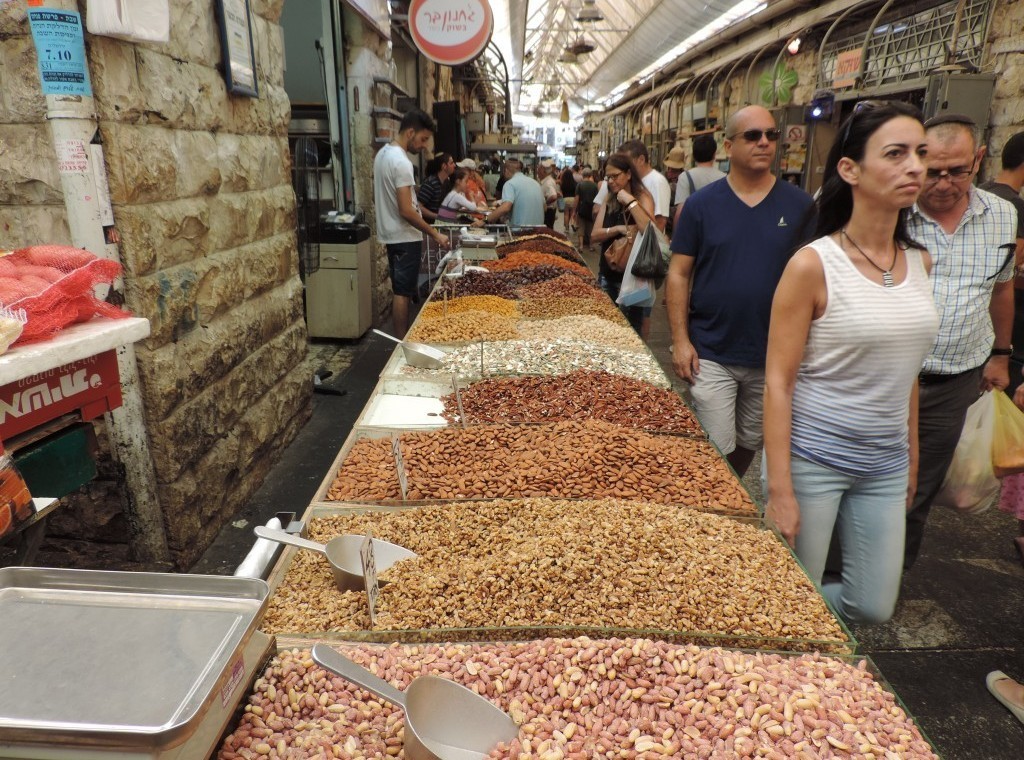
Jerusalemites simply call it the shuk. Mahane Yehuda is where the city buys its tomatoes, its spices and its Friday challah, and where it comes back at night for a drink. Hundreds of stalls fill the lanes between Jaffa Road and Agripas Street, and on a busy morning you hear Hebrew, Arabic, Russian, French and English shouted across the same few meters of pavement.
Our guide to things to do in Jerusalem gives the market a short stop on a list of ten. This guide goes deeper: how the market is laid out, what to taste, when to come and how it changes after dark.
How the Market Works
The market grew up at the end of the 19th century beside the new neighborhood of Mahane Yehuda, outside the Old City walls. Farmers and traders sold produce in an open lot here in Ottoman times, and under the British Mandate the city added permanent stalls and roofs. It has been reshaped many times since, but it is still a working market first and an attraction second.
Two long lanes form its spine. Mahane Yehuda Street is open to the sky and lined with fruit and vegetable stalls. Etz HaChaim Street, parallel to it, is covered, which makes it the cooler choice on a hot day. Between them run short alleys, several named after fruits and nuts, such as HaAfarsek (peach) and HaEgoz (walnut). Toward the western end, a small square known as the Iraqi market has older traders, backgammon games by day and bars by night.
The Jerusalem light rail stops on Jaffa Road at the market’s edge, and the lanes are all on foot.
What to Taste
The best way to eat in the shuk is to share small bites as you walk, so you can try ten things instead of two. These are the ones we point guests toward first:
- Rugelach. Small rolled pastries, best with chocolate and still warm from the oven. Several bakeries compete for the title of the stickiest.
- Halva. A dense sesame sweet sold in great wheels, flavored with pistachio, coffee, chocolate and much more. Vendors cut tasting slivers before you buy.
- Kubbeh soup. Dumplings of semolina stuffed with meat, served in a sour or beet broth, from the kitchens of Kurdish and Iraqi Jews. It is comfort food on a winter day.
- Sabich. Pita filled with fried eggplant, hard-boiled egg, tahini, salad and amba, a tangy mango sauce, brought to Israel by Iraqi Jews.
- Hummus and falafel. Small counters serve both fresh through the day, for a quick lunch between tastings.
- Fresh juice. Pomegranate in the autumn and winter, and a choice of fruit mixes all year.
- Bourekas. Flaky pastries filled with cheese, potato or spinach, sold by weight.
- Spices and tea. Za’atar, sumac, baharat and the Yemenite blend hawaij, piled in open sacks. They pack flat and make one of the best souvenirs to take home.
- Dried fruit, nuts and olives. Ask to taste before you choose, and buy in small amounts.
Come hungry, pace yourself, and keep some room for coffee and something sweet at the end.
The Friday Rush
Friday morning is when the market is at its most intense. The whole city shops for Shabbat at once, so the lanes fill with challah, flowers, fish, cakes and shoppers pushing carts. The stalls begin to close in the early afternoon, and in the last hour some vendors call out ever lower prices to clear their stock.
If you want the energy, come mid-morning and go with the flow of the crowd. If you prefer room to look and talk to the traders, a weekday morning is easier, and Thursday combines a busy day with a lively evening. Keep bags small and close to you, and leave strollers behind on a Friday if you can.
The days before the big holidays are just as busy, with seasonal specialties: honey and pomegranates before Rosh Hashanah, jelly doughnuts at Hanukkah and hamantaschen before Purim.
Shabbat and Holidays
The market closes on Friday afternoon before Shabbat and stays closed through Saturday. Some bars and restaurants reopen on Saturday night after Shabbat ends, but the stalls do not. It also closes on Yom Kippur and on the major Jewish holidays, often from the afternoon before.
If your only free day in Jerusalem is a Saturday, plan the market for another day, or for Saturday night once Shabbat is out.
The Market After Dark
In the evening the produce stalls pull down their metal shutters, and the shuk becomes a different place. Many of those shutters carry spray-painted portraits of figures from Jewish and Israeli history, culture and faith, a large open-air gallery that you can only see once the market has closed.
Small bars and restaurants then spread into the alleys, with music, counters along the lanes and tables wherever there is space. Some of the city’s best-known chef restaurants are here, cooking with what the stalls sold that day. Thursday night is the liveliest, and on a warm evening the crowd stays out late. Book dinner ahead if you have a particular place in mind.
Tasting Tours and Cooking Workshops
You can graze the market on your own, but a guide makes a short visit much richer. A food guide knows which stall makes the best version of each dish, introduces you to traders whose families have worked here for generations, and tells the stories of the communities who brought their cooking to Jerusalem. A tasting tour usually takes two to three hours and works well for families.
For travelers who cook, a market workshop goes one step further: you shop the stalls with a chef, then cook and share a meal together. If you keep kosher, ask about it when you plan; most food in the market is kosher, but the level of supervision differs from stall to stall, and a guide helps you choose.
Tips for Your Visit
- Bring a little cash. Many stalls take cards, but small bills help for a single pastry or a juice.
- Do not expect to haggle much. Prices at food stalls are usually posted. The bargains come on their own at the end of a Friday.
- Arrive by light rail or by car with a driver. Parking near the market is very hard to find.
- Leave time for Nachlaot. The neighborhood just south of the market is a maze of small courtyards and synagogues, and a quiet walk there is a good break from the crowd.
Plan a Jerusalem Food Day with Us
Mahane Yehuda is a favorite stop on our culinary tours, where a morning in the market often leads to a cooking workshop or a winery visit outside the city. It also fits easily into any Jerusalem day, between the Old City and an evening out. For more on the city, see our guide to Jerusalem.
Our guides are licensed by Israel’s Ministry of Tourism, and we plan every trip around your dates, interests and pace. Tell us when you are traveling and what you love to eat. Get a free quote.
Frequently Asked Questions
What is the best day to visit Mahane Yehuda Market?
Friday morning is the most exciting, as the city shops for Shabbat, but it is also the most crowded. For an easier visit, come on a weekday morning, and come back on a weekday evening, especially Thursday, for the bars and restaurants.
Is Mahane Yehuda Market open on Shabbat?
No. The stalls close on Friday afternoon and stay closed through Saturday. Some bars and restaurants reopen on Saturday night after Shabbat ends.
Is the food at Mahane Yehuda kosher?
Most of it is, but the level of kosher supervision differs between stalls and restaurants. If you keep kosher, look for the certificate on display or ask your guide to help you choose.