
Mitzpe Ramon is a small desert town in the heart of the Negev, and it stands on the edge of one of the most striking landscapes in Israel. Walk to the rim behind the houses and the ground simply drops away into Makhtesh Ramon, a vast valley of colored rock that stretches to the horizon. Ibex graze along the edge, and the silence is almost total.
After dark, the same view becomes one of the darkest night skies in the country. This guide covers both sides of a stay: the crater by day and the stars by night, with tips on when to come and where else in Israel to look up.
The Ramon Crater
Makhtesh Ramon is usually called the Ramon Crater, but it was not made by a meteor or a volcano. It is a makhtesh, a landform shaped by erosion: over millions of years, water wore away soft sandstone beneath a harder cap of limestone, leaving a steep-walled valley. The Hebrew word is now used by geologists around the world for this kind of landscape.
It is about 40 kilometers long, up to 10 kilometers wide and around 500 meters deep. Its walls and floor expose rock from very different eras, from colored sandstones to dark volcanic hills and layers rich in fossils.
The Visitor Center
Start at the visitor center on the rim, at the edge of town. Its exhibits explain how the makhtesh formed, and they also tell the story of Ilan Ramon, Israel’s first astronaut, who died in the Columbia space shuttle disaster in 2003. His family name matches the crater’s, which gives the visit a personal touch.
The terrace outside is the classic first look over the makhtesh. Entry is by advance reservation, and the schedule changes with the seasons, so book before you go.
Hikes In and Around the Crater
A few favorite walks, from easy to demanding:
- The rim promenade. An easy, paved walk along the cliff edge from the visitor center, with lookouts and stone sculptures set against the view. It is the place to be at sunrise and sunset.
- Mount Ardon. A steep climb from the crater floor to a summit at its northeastern end, with views across the makhtesh. Loop routes take five to six hours, so start early.
- The Carpentry Shop. A small hill covered in prism-shaped rocks that look like stacked timber, a short walk from the road through the crater.
- The Colored Sands. A slope of sand in shades of red, yellow and purple, best seen in the low light of the morning or the late afternoon.
- Ein Saharonim. A desert spring near the ruins of a Nabataean caravan inn, a stop on the ancient Incense Route that crossed the Negev.
Start early, carry at least three liters of water per person and stay on marked trails. In winter, rain can bring sudden flash floods, so avoid riverbeds and canyons when rain is forecast. For longer routes, go with a local guide.
Jeep Tours and Other Ways to See It
A jeep tour is the easiest way to cover a lot of the makhtesh in a few hours. A local driver-guide takes you across the floor, past the Colored Sands, the Carpentry Shop and a cliff with fossil ammonites, explaining the geology as you go. It suits families and travelers who prefer not to hike, and a sunset tour ends as the walls turn red.
Licensed operators also offer rappelling from the rim and mountain biking. In town, the Spice Route Quarter, an old industrial area, now holds galleries, workshops and small cafes, and families enjoy the alpaca farm just outside town.
The Dark-Sky Park
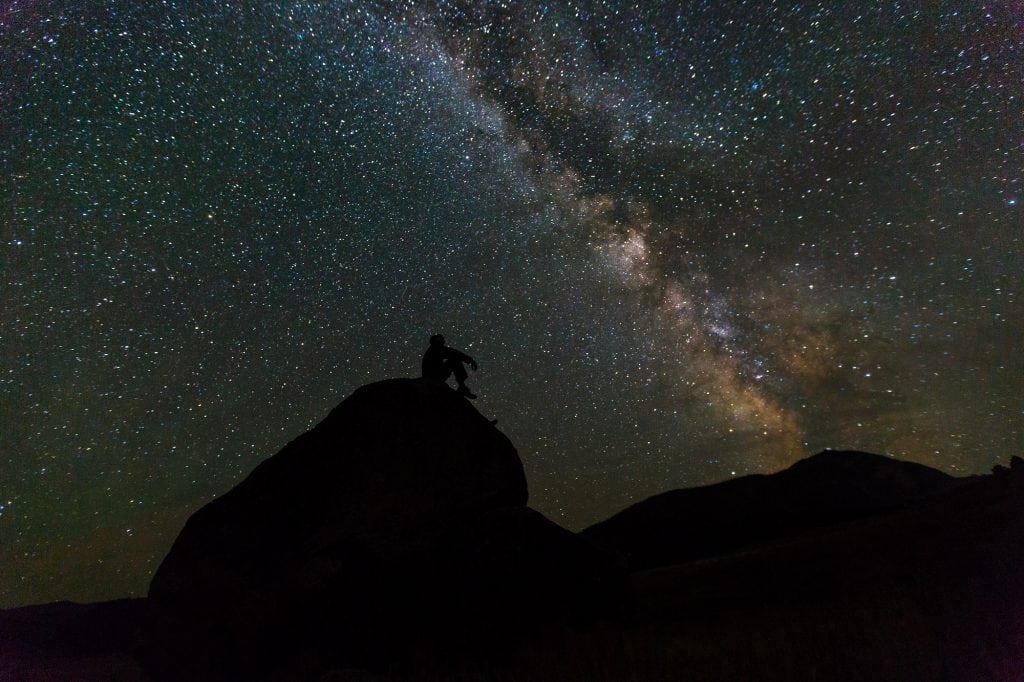
In 2017 the Ramon Crater was recognized as an International Dark Sky Park by the International Dark-Sky Association, now known as DarkSky International. It was described at the time as the first such park in the Middle East. To keep it, the nature reserve manages artificial light, for example at its night campgrounds, and works with the town and local operators to keep the sky dark.
For visitors, it means that on a clear, moonless night you can see the Milky Way with the naked eye.
Stargazing Nights
The best way to enjoy the sky is with a local stargazing guide. Over an hour or two, a guide points out the constellations with a laser beam and sets up telescopes for a close look at the Moon, the planets or a star cluster. Sessions can be arranged privately for your group, and some lodges run their own.
Timing makes a big difference:
- Watch the Moon. The darkest nights fall in the week around the new moon. A full moon hides the fainter stars, so check the lunar calendar for your dates.
- Choose your season. Summer nights are usually clear, and the bright center of the Milky Way is easiest to see from spring to early autumn. Winter brings crisp air and long nights, with some cloudy spells.
- Meteor showers. The Perseids, which peak in mid-August, draw large crowds to the desert, and the town has held summer star festivals around them in some years. The Geminids in mid-December are strong too, on much colder nights.
- Dress warmly. The town sits high above sea level, so nights are cool even in summer and close to freezing in winter.
Where Else to See the Stars in Israel
If Mitzpe Ramon does not fit your route, there are other good places to look up:
- The southern Negev and the Arava. A Bedouin hospitality tent or a desert lodge farther south comes with a dark sky and a fire.
- The Judean Desert near Masada. Desert camps near Masada let you watch the stars and then climb the fortress for sunrise. See our Masada guide.
- The Golan Heights. Rural, high and far from big cities, with dark skies on clear nights. The Golan is near the northern borders, so check access near your travel dates; our safety and flexibility page explains how we handle changes.
- Near Tel Aviv. The Givatayim Observatory has long held public viewing evenings with telescopes; check its current schedule. The city sky is brighter, but the Moon and the planets still look good.
Practical Tips for Mitzpe Ramon
- How long. One night covers the visitor center, a short hike and a stargazing session. Two nights add a jeep tour or a longer hike at an easy pace.
- Getting there. The town is on Route 40, about two to two and a half hours’ drive from Tel Aviv or Jerusalem and about two hours from Eilat, so it breaks the long drive south.
- Book ahead. Lodging and stargazing guides fill up on weekends, over the Jewish holidays and in mid-August.
- Plan around the heat. In summer, hike in the early morning and rest in the middle of the day.
Plan Your Desert Nights with Us
Mitzpe Ramon is a natural overnight stop on the way south; for more places to pair it with, see our guide to the cities to visit in Israel. We can arrange the jeep tour, a private stargazing session and a Bedouin hospitality evening, and on our family tours a night under the desert sky is often the moment children talk about most.
One team can arrange the hotels, private transportation, guiding and activities, and we plan every trip around your dates, interests and pace. Tell us when you are traveling. Get a free quote.
Frequently Asked Questions
Is the Ramon Crater a real crater?
No. Despite its English name, it was not made by a meteor or a volcano. It is a makhtesh, a valley carved by erosion over millions of years, and it is the largest of its kind in the world.
When is the best time for stargazing in Mitzpe Ramon?
Come in the week around the new moon, when the sky is darkest. Summer nights are the most reliably clear, and spring to early autumn is best for the Milky Way, but the sky is good in every season.
How many nights should I stay in Mitzpe Ramon?
One night is enough for the visitor center, a short hike and an evening of stargazing. Two nights let you add a jeep tour or a longer hike without rushing.