Few countries this small give you four very different kinds of water. In Israel you can swim in the Mediterranean, paddle in the fresh water of the Sea of Galilee, float in the Dead Sea and snorkel over coral in the Red Sea, sometimes all in the same week. The beach is also where Israelis spend their free time, so an afternoon on the sand shows you a side of the country that no museum can.
This guide covers the beaches we suggest most often, from the far north of the Mediterranean coast down to Eilat, and the practical things that make a beach day go well: lifeguard seasons, flags, jellyfish, weekend crowds and beaches set aside for religious bathers.
The Mediterranean Coast, North to South
Israel’s Mediterranean shore runs for roughly 190 kilometers, and most of it is sand. City beaches have lifeguards, showers, cafes and chairs to rent. The nature reserves in between are quieter, with sandstone cliffs, rock pools and fewer facilities.
Achziv, near Rosh Hanikra
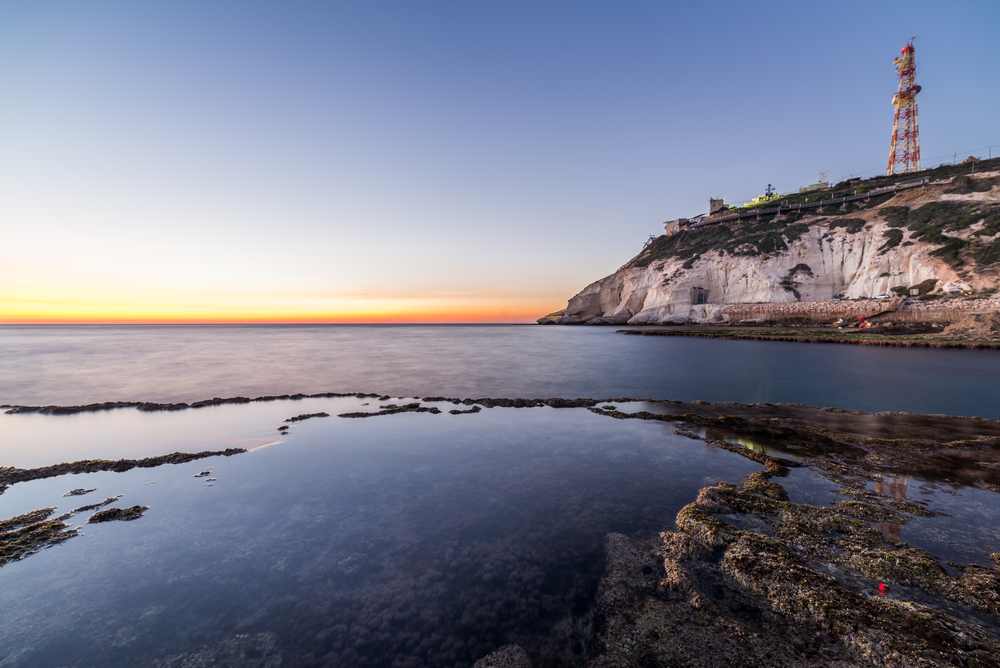
At the northern end of the coast, Achziv National Park protects a stretch of shallow lagoons, rock pools and the remains of an old fishing village. The water inside the natural pools is calm on most summer days, which makes it a good stop for families, and the white cliffs of Rosh Hanikra close the view to the north. Sea turtles nest on some of the beaches here in summer, so keep clear of any marked nests.
Achziv is close to the Lebanese border, so check access near your travel dates. Our safety and flexibility page explains how we handle changes to an itinerary.
Dor HaBonim and Dor Beach
About halfway between Haifa and Caesarea, the Dor HaBonim nature reserve is a coastline of small coves and rocky inlets with a walking trail along the top. It suits travelers who like to walk first and swim after. Next door, Dor Beach has shallow water sheltered by small islands, and it is one of the calmer spots on the coast for younger children.
Caesarea
Caesarea lets you combine history and the sea in one stop. After the Roman theater and King Herod’s harbor in the national park, drive a few minutes north to the beach beside the old aqueduct, whose arches run along the sand. Divers and snorkelers can explore underwater trails among the remains of the ancient harbor. Check whether a lifeguard is on duty before you swim at the aqueduct.
Netanya
Netanya’s beaches sit below a line of cliffs, with an elevator and stairways down from the clifftop promenade. The water is usually calm enough for a relaxed swim, and the beaches have the full range of city services: lifeguards, chairs, surf lessons and beach volleyball.
Herzliya
Herzliya is quieter than its southern neighbor and popular with families. North of the hotel beaches, Apollonia National Park keeps the ruins of a Crusader fortress on the cliff above the sea. At the marina you can charter a sailboat or a motor yacht for a few hours on the water.
Tel Aviv
Tel Aviv’s beaches run in an almost unbroken line from the old port in the north to Jaffa in the south, with a promenade beside them the whole way. Each stretch has its own character. Metzitzim, next to the port, is a favorite with families. The Nordau separate beach serves religious bathers. Hilton Beach draws surfers and the city’s gay community, and has a section where dogs are welcome. Gordon and Frishman in the center are the busiest, with volleyball nets and the steady click of matkot, the paddle ball game Israelis play at the water’s edge. Further south, Jerusalem Beach and Banana Beach are more laid-back, and on Friday afternoons a drum circle often gathers near the site of the old Dolphinarium as the sun goes down.
Mornings are the calmest time on Tel Aviv’s sand, and the northern beaches are generally quieter than the central ones. Our guide to Tel Aviv shows how a beach afternoon fits around a city tour.
Palmachim and Ashkelon
South of Tel Aviv, Palmachim is a protected beach backed by low sandstone cliffs, with very few services. Israelis come with a cooler and a beach umbrella and stay the day, and the cliff path above gives wide views along the coast.
Further south, Ashkelon has long sandy beaches and a national park where the ruins of the ancient city sit right above the sea. Ashkelon is close to the Gaza Strip, so check access near your travel dates before planning a visit.
The Sea of Galilee
The Sea of Galilee, called the Kinneret in Hebrew, is a freshwater lake more than 200 meters below sea level. The water is warm and calm through the summer, with no salt and no surf, which suits swimmers who prefer a lake to the open sea. Most beaches are pebbly or grassy rather than sandy, so water shoes help. The main public beaches are free to walk into, with paid parking, and have lifeguards in season, shade and showers; some privately run beaches charge admission.
A swim here is an easy way to cool off between visits to Capernaum, Tabgha and the Mount of Beatitudes. Israelis also love to camp on the shore, so the beaches fill with tents and barbecues on summer weekends and during Passover and Sukkot. The lake level rises and falls from year to year, which changes how far you walk to reach the water.
The Dead Sea
At the Dead Sea you float rather than swim. The water is so salty that you lie back and the lake holds you up, and most visitors also cover themselves in the black mud from the shore. The easiest place to do this is at Ein Bokek, where hotel beaches and a public beach have showers, shade and lifeguards.
A few rules make it pleasant. Keep your head and face out of the water, walk in slowly instead of splashing, stay in for no more than 15 or 20 minutes at a time, and wear water shoes, because the salt crystals underfoot are sharp. Avoid shaving on the day you float. Sinkholes have formed along parts of the shore, so use official beaches only.
Our Dead Sea guide covers spa days and how the visit fits with Masada, and our Dead Sea facts explain why the lake is shrinking.
The Red Sea at Eilat
Eilat sits on the northern tip of the Gulf of Aqaba, with the mountains of Jordan and Egypt across the water. The sea here is warm enough for swimming for much of the year, and coral reefs start a few steps from the shore.
At the Coral Beach Nature Reserve, bridges lead you over the reef into deeper water, so you can snorkel among colorful fish without touching the coral. Nearby, the Dolphin Reef combines a quiet beach with a pod of dolphins that lives in a netted area of the bay. For everything else the city offers, from the desert canyons to the Underwater Observatory, see our guide to things to do in Eilat.
Practical Tips for a Beach Day in Israel
- Swim only where a lifeguard is on duty. The Mediterranean has strong rip currents, and swimming at a beach without a lifeguard is against the rules. The official swimming season usually runs from spring, around late March or April, to October. Outside it, only a few beaches keep lifeguards, on shorter hours, so check what is open for your dates.
- Read the flags. A white flag means swimming is permitted, a red flag means conditions are dangerous and you should follow the lifeguard’s instructions, and a black flag means no swimming at all.
- Watch for jellyfish in early summer. Large swarms of jellyfish usually reach the Mediterranean coast in early summer, peaking in June and July. Lifeguards announce them, and the sting is painful but passes. Rinse the sting with seawater first and do not rub the skin. These swarms are a Mediterranean event; the Sea of Galilee and the Dead Sea do not get them.
- Expect crowds on Shabbat and holidays. The Israeli weekend is Friday and Saturday, and that is when beaches are busiest, along with Passover, Sukkot and the long summer school vacation. Weekday mornings are the quietest time to go.
- Separate beaches. Several coastal cities, including Tel Aviv and Haifa, have separate beaches for religious bathers, with set days for men and for women. Modest swimwear is expected there, and some are open to everyone on Saturday. A few beaches on the Sea of Galilee follow the same idea.
- Plan for the sun. The midday sun is strong for most of the year. Bring a hat, high-factor sunscreen and plenty of water, and leave the middle of the day for lunch in the shade.
Plan Your Beach Days with Us
Beach time fits into almost any itinerary, from a free afternoon in Tel Aviv after a morning of touring to a full day at the Dead Sea or a few nights in Eilat. On our family tours we often build in a swim after a long day of sightseeing, because children remember it as much as anything else they see. We plan trips around your dates, interests and pace, and one team can arrange the hotels, private transportation, guiding and activities.
Tell us when you are traveling and which seas you want to see, and we will fit the beach days into your trip. Get a free quote.
Frequently Asked Questions
When is the best time for a beach holiday in Israel?
For the Mediterranean and the Sea of Galilee, the warmest water is from June to October. The Red Sea at Eilat and the Dead Sea can be enjoyed for much of the year, and they are especially pleasant in spring and autumn, when the desert heat is milder.
Can you swim in the sea in Israel in winter?
On the Mediterranean, most beaches have no lifeguards in winter and the sea is often rough, so swimming is limited to the few beaches that stay staffed. Eilat is the usual choice for winter swimming, and the Dead Sea hotels have heated indoor pools filled with Dead Sea water.
Are Israeli beaches free?
Most city beaches on the Mediterranean are free to enter, though you pay to rent chairs and umbrellas. Beaches inside national parks and some privately run beaches on the Sea of Galilee and the Dead Sea charge an entry fee, and elsewhere you may pay for parking.