Few things explain modern Israel as well as the kibbutz. These small communities, built on shared work and shared property, helped settle the land, shaped the country’s farming, and produced a remarkable number of its early leaders. Today they range from traditional farming villages to modern towns with factories, hotels and art museums.
A kibbutz visit gives you a feel for that story in a way no museum can. Here is a short background, a look at how kibbutz life has changed, and the kibbutzim we suggest for a first visit.
What Is a Kibbutz?
The word comes from the Hebrew for “gathering” or “group”. A kibbutz is a community whose members traditionally owned property together, worked in the community’s own farms and businesses, and shared the income. Meals were eaten together in a central dining hall, and decisions were made at a general assembly of members.
There are roughly 270 kibbutzim in Israel today, home to a small share of the population. They differ widely in size, from a few hundred people to a few thousand, and in how strictly they still follow the original model.
How the Kibbutz Movement Began
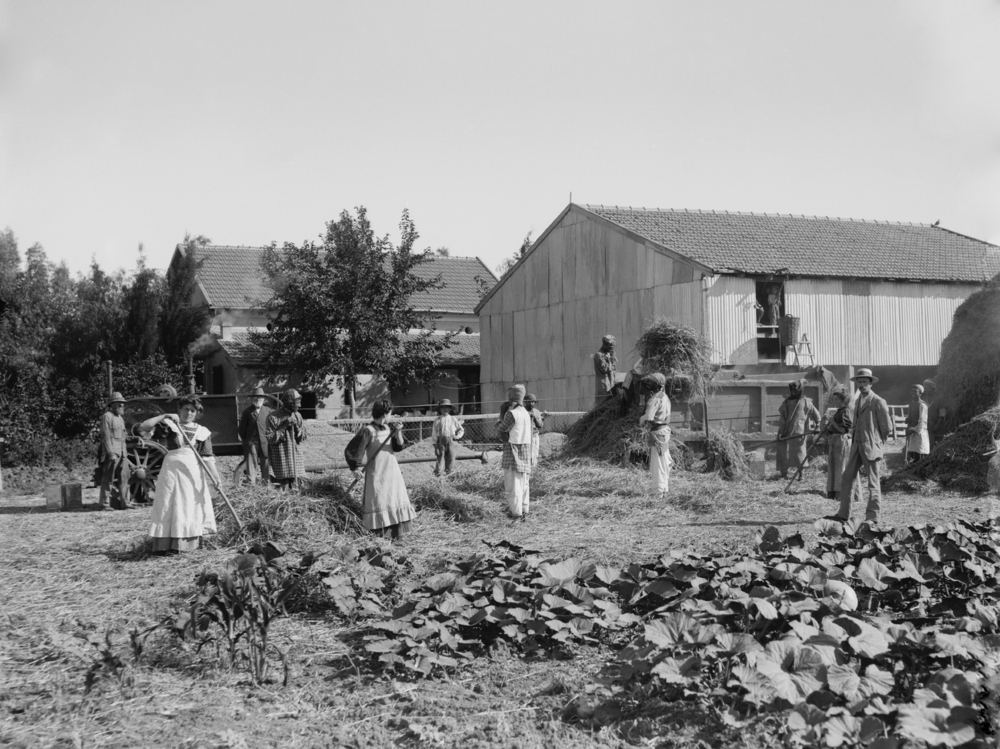
The first kibbutz, Degania, was founded in 1910 by a small group of young Jewish pioneers on the southern shore of the Sea of Galilee. They wanted to farm the land themselves and to live as equals, with no owners and no hired workers.
Others soon followed. Over the next decades, kibbutzim spread across the Jezreel Valley, the Galilee and later the Negev. Members drained marshes, cleared stony fields and planted orchards in places that had been hard to farm. Many kibbutzim were placed with security in mind as well as farming, and they played a central role in the years before and after Israel’s independence in 1948.
Life on a Kibbutz, Then and Now
Work and Income
In the early decades, nearly everyone worked in agriculture or in the services the community needed: the kitchen, the laundry, the school. Members received no salary. The kibbutz provided housing, food, education and health care, and a small allowance for personal needs.
That model has changed a great deal. After an economic crisis in the 1980s, most kibbutzim gradually moved to what is often called a “renewed” model, in which members earn differential salaries, many work outside the kibbutz, and homes can be privately owned. A minority still keep a fully shared economy. Agriculture remains important, but many kibbutzim now earn most of their income from industry, tourism and services.
Children and Education
One of the best-known features of early kibbutz life was the children’s house. On many kibbutzim, children slept and spent much of the day in houses with others their age, cared for by trained caregivers, and spent the afternoon and evening with their parents. The idea was to share child-rearing across the community and free both parents to work.
Communal sleeping ended on almost every kibbutz by the 1990s, and children today live at home with their families. Kibbutz schools and a strong sense of community remain.
Equality
Equality between members, including men and women, was a founding ideal. In practice, historians note that women often ended up in traditional roles such as childcare and the kitchen, and the movement has debated this for generations. A good guide can talk you through these questions honestly, and kibbutz members are often happy to share their own family’s story.
The Kibbutzim Near Gaza
On 7 October 2023, Hamas attacked kibbutzim and towns near the Gaza border, among them Be’eri, Kfar Aza and Nir Oz. Hundreds of residents were killed, others were taken hostage, and whole neighborhoods were destroyed. The communities have been rebuilding since, and some residents have begun to return home. Their story is now part of how many Israelis understand the kibbutz and what it stands for.
Kibbutzim to Visit
Each kibbutz is a private community and a home, so visits work best when they are arranged in advance and led by a guide or a member. These are good places to start.
Degania
The first kibbutz still sits by the Jordan River where it flows out of the Sea of Galilee. You can see the original courtyard and learn about the founders and the early years. It fits easily into a day around the Sea of Galilee, together with the nearby Kinneret Courtyard, where some of the earliest pioneers lived.
Sde Boker
In 1953 David Ben-Gurion, Israel’s first prime minister, left office for a time and moved to Kibbutz Sde Boker in the Negev, to show his belief that the desert could be settled. His modest home has been kept as he left it and is open to visitors. His grave is a few minutes away at Midreshet Ben-Gurion, overlooking the Zin Valley.
Ein Gedi
Kibbutz Ein Gedi sits above the shore of the Dead Sea, and its grounds are a botanical garden with plants from around the world growing in the desert. It pairs naturally with a hike at the nearby Ein Gedi Nature Reserve and a visit to Masada.
Yotvata
In the Arava valley north of Eilat, Kibbutz Yotvata is known across Israel for its dairy, and its roadside stop on Route 90 is a favorite break on the drive south. It is a simple way to see how a desert kibbutz makes a living, especially with children.
Ma’agan Michael
On the Mediterranean coast south of Haifa, Ma’agan Michael is one of the largest kibbutzim in the country. It shows the modern face of the movement, with fish ponds, fields and industry side by side.
Tips for Your Kibbutz Tour
- Arrange visits ahead. A kibbutz is a home, not an attraction, so plan your visit through a guide or the kibbutz’s own visitor program.
- Stay overnight. Many kibbutzim run guest houses and country hotels, which are a relaxed way to experience daily life.
- Eat in the dining hall if you are invited. Not every kibbutz still serves daily communal meals, but where they do, it is the heart of the community.
- Bring children. Farm visits, animals and open space make kibbutzim a natural fit for families.
Add a Kibbutz to Your Israel Trip
A kibbutz visit fits naturally into our agriculture tours, for travelers curious about how Israel farms its land, from the Galilee to the desert. It also works well on family tours, where children can meet the animals and see where their food comes from. Our guides are licensed by Israel’s Ministry of Tourism, and we build each day around your interests and pace.
Tell us what you would like to see, and we will plan your kibbutz visit as part of your trip. Get a free quote.
Frequently Asked Questions
Can tourists visit a kibbutz?
Yes. Many kibbutzim welcome visitors through guided tours, museums, guest houses and farm activities. Because a kibbutz is a private community, it is best to arrange your visit in advance.
Can I stay overnight on a kibbutz?
Many kibbutzim run guest houses or hotels, often in quiet country settings. Staying a night is a comfortable way to see daily life and to break up a long drive.
Are kibbutzim still communal?
Some are, but most have changed. The majority now pay members salaries and allow private ownership, while keeping shared services and a strong community life. A minority still run a fully shared economy.