Jerusalem rewards slow travel. Three faiths hold it sacred, every street corner seems to carry a few thousand years of history, and the city you see at sunrise at the Western Wall feels completely different from the one you find at midnight in Mahane Yehuda. That is exactly why first-time visitors find it hard to plan: there is far more to see than any single trip allows.
Our team has been planning trips in Israel since 1981, and these are the ten experiences we would never let a first-time visitor miss. Use the list to decide what matters most to you, then let the days take shape around it.
1. The Western Wall
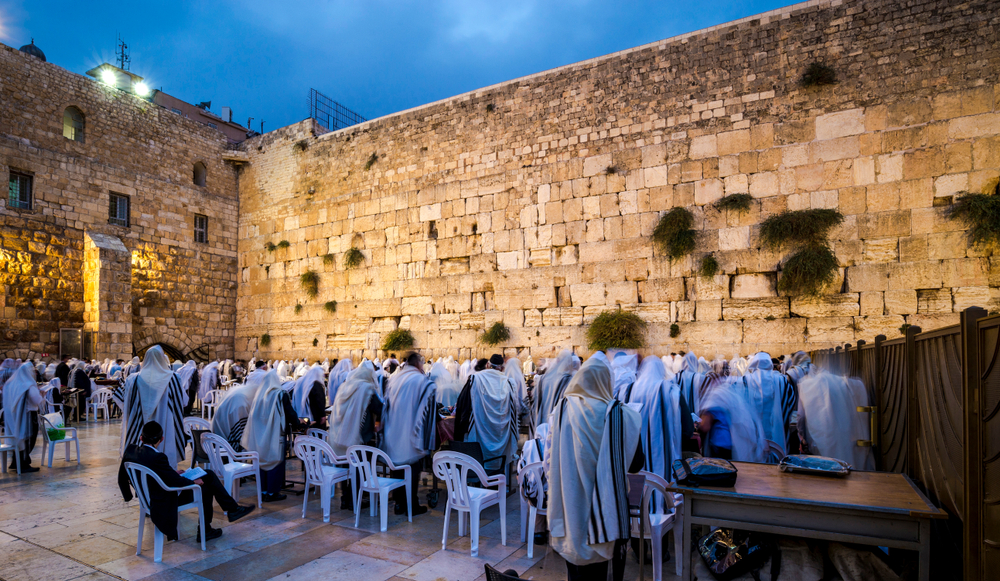
The Western Wall, also called the Kotel or the Wailing Wall, is the most important prayer site in Judaism. It is the last remaining retaining wall of the platform that held the Second Temple, and people come here at every hour of the day to pray, to celebrate bar and bat mitzvahs, and to tuck handwritten notes between its stones.
Visit twice if you can: once early in the morning, when it is quiet, and once on Friday evening, when crowds gather to welcome Shabbat with songs. For a look at what lies beneath, book a guided visit to the Western Wall Tunnels in advance. Modest dress is expected at the wall itself.
2. The Mount of Olives
For the classic view of Jerusalem, with the golden Dome of the Rock in front of you and the Old City walls stretching out on either side, head to the lookout at the top of the Mount of Olives. The hillside holds the oldest Jewish cemetery still in use, and several churches line the road down to the Garden of Gethsemane, which is why Jewish and Christian visitors alike consider it a place of deep meaning.
Come in the morning, when the sun lights up the city from behind you, and walk down the slope rather than up.
3. Yad Vashem
Yad Vashem is Israel’s memorial to the six million Jews murdered in the Holocaust, and a visit stays with people long after their trip ends. The main history museum tells the story through personal objects, testimony and film. Outside, the Children’s Memorial and the Garden of the Righteous Among the Nations, which honors non-Jews who risked their lives to save Jews, are just as moving.
Plan at least three hours, and leave some quiet time afterward rather than rushing to the next stop.
4. The Church of the Holy Sepulchre
Christian tradition places both the crucifixion and the tomb of Jesus inside this church in the Christian Quarter. The first church on the site was built in the 4th century, and much of what you see today dates from the Crusader period. Several Christian communities share the building, each with its own chapels and ceremonies, which gives it a layered, lived-in atmosphere unlike any other church.
Arrive early to avoid the longest lines at the Edicule, the shrine built over the tomb. If you walk the Via Dolorosa, its last five stations are inside the church.
5. The Temple Mount and the Dome of the Rock
The Temple Mount, known in Arabic as Haram al-Sharif, is the raised compound above the Western Wall. It is the holiest site in Judaism and one of the holiest in Islam. Two buildings stand on it: the Dome of the Rock, completed at the end of the 7th century and crowned by the golden dome that defines the city’s skyline, and the al-Aqsa Mosque at the southern end of the platform.
Visitors who are not Muslim can enter the compound at set times through a single gate near the Western Wall, but cannot go inside the two buildings. Opening hours are short and can change at short notice, so this is one visit worth timing with someone who checks the day’s schedule.
6. Mahane Yehuda Market
No visit to Jerusalem is complete without the shuk. By day, Mahane Yehuda is a maze of stalls selling fresh produce, spices, halva, pastries and street food, and the best way to explore it is to graze your way from one end to the other. Friday mornings are the busiest and most exciting time, as the whole city shops for Shabbat dinner.
After dark, many stalls close their shutters and the alleys fill with small bars and restaurants. A guided tasting tour is one of the easiest ways to understand Israeli food in a single afternoon, and it is a favorite on our culinary tours.
7. The Old City
Beyond its famous landmarks, the Old City is a place to wander. Its four quarters, Jewish, Christian, Muslim and Armenian, each have their own character, markets and courtyards, all within walls you can walk around in about an hour. Turn down a side alley and you will find workshops, rooftop views and family bakeries that most visitors walk straight past.
Stop for hummus or a plate of warm knafeh along the way. A guide who knows the lanes makes all the difference here, especially if you want to cover the quarters in a single day without losing the sense of discovery.
8. The Tower of David
The citadel next to Jaffa Gate is home to the Tower of David Jerusalem Museum, which tells the story of the city from its earliest days to the present. The galleries were renewed in recent years and are among the best places to get your bearings before exploring the Old City. Don’t miss the view from the ramparts.
In the evening, the citadel walls become the screen for a sound and light show about Jerusalem’s history. Check the schedule before you go, as it runs on selected nights.
9. The Israel Museum
Israel’s national museum covers archaeology, Jewish art and life, fine art, and a beautiful sculpture garden, so it works just as well for families as for history buffs. Two highlights stand out: the Shrine of the Book, where some of the Dead Sea Scrolls are displayed in a building designed to echo the lids of the jars they were found in, and the large-scale model of Jerusalem as it looked in the Second Temple period.
Seeing the model before you walk the Old City helps everything fall into place.
10. The Knesset
Israel’s parliament is often skipped, which is a shame. A guided tour of the building takes you through the plenary hall and the Chagall Hall, with its tapestries and mosaics by Marc Chagall, and gives you a quick, clear introduction to how the country is governed. Tours run on set days, you need your passport to enter, and larger groups must book ahead.
How to Fit It All In
Most travelers need at least two full days to see Jerusalem properly, and three if they want to include Yad Vashem, the Israel Museum and an evening in the market without rushing. A few things help:
- Start early. The Western Wall, the Temple Mount and the Church of the Holy Sepulchre are all calmer in the first hours of the morning.
- Plan around Shabbat. From Friday afternoon to Saturday evening, many Jewish sites, shops and restaurants close and public transport stops, while Christian and Muslim sites keep their own schedules.
- Dress for holy sites. Bring a layer to cover your shoulders and knees, even in summer.
- Book ahead for the Western Wall Tunnels, Yad Vashem and the evening show at the Tower of David, and check the Knesset tour days.
Explore Jerusalem with a Private Guide
Jerusalem is the heart of almost every itinerary we build, from our Holy Land tours to Jewish heritage tours and bar and bat mitzvah trips. Our guides are licensed by Israel’s Ministry of Tourism, and we adapt every day to your interests and pace, whether you want more time at the Western Wall or a free afternoon in the market. For more background on the city, see our guide to Jerusalem.
Tell us when you are traveling and what you would most like to see, and we will build your Jerusalem days around it. Get a free quote.
Frequently Asked Questions
How many days do you need in Jerusalem?
Plan at least two full days for the main sights, and three if you want to add Yad Vashem, the Israel Museum and some unhurried time in the Old City and the market.
What should I wear to visit holy sites in Jerusalem?
Cover your shoulders and knees at the Western Wall, in churches and on the Temple Mount. A light scarf or shawl is the easiest way to be ready for any site you pass during the day.
Is it better to visit Jerusalem with a guide?
You can see Jerusalem on your own, but a licensed guide helps you understand what you are looking at, move through the Old City efficiently, and time visits to sites with limited or changing hours.
Related reading: Things to Do in Bethlehem: A Guide for Holy Land Travelers.